
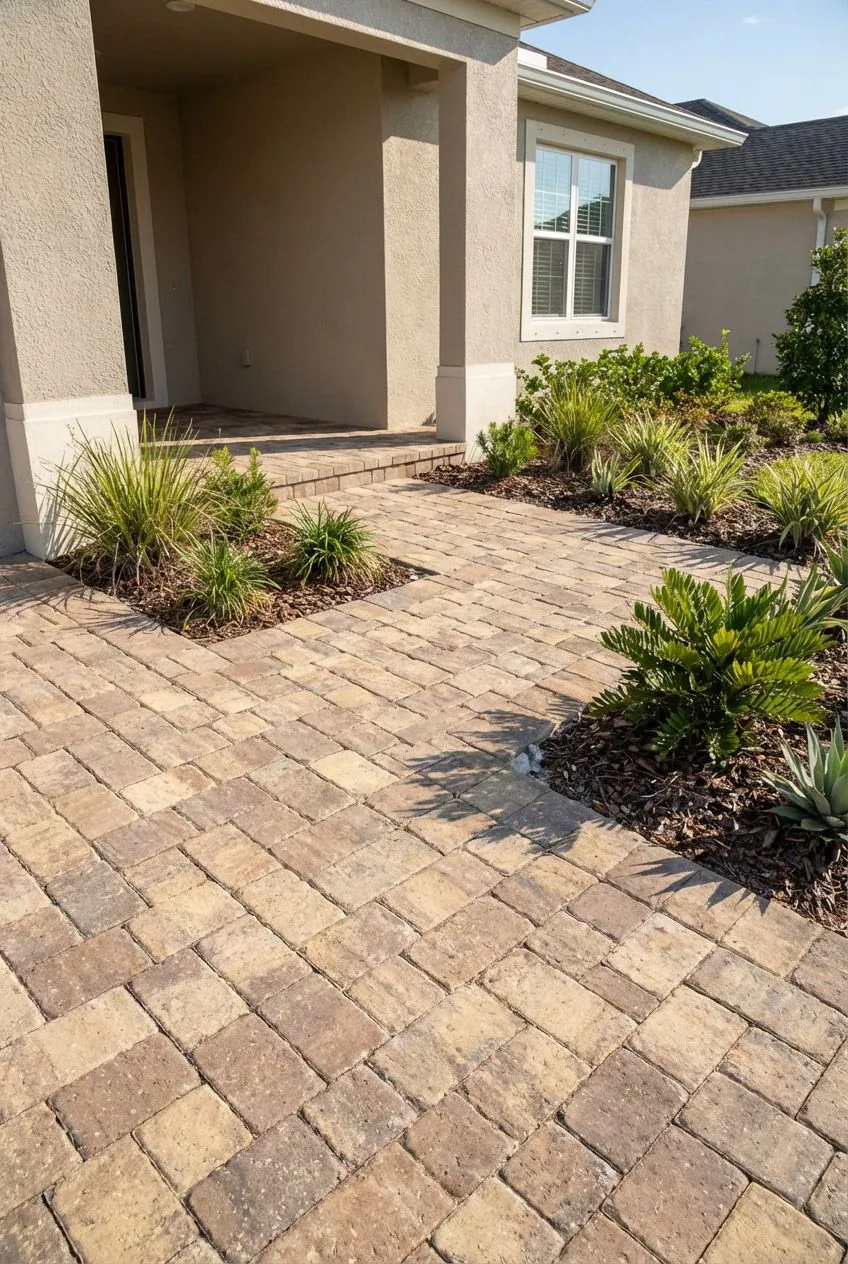
Florida's climate is the toughest environment for unprotected pavers in the continental United States. Intense UV, 50+ inches of annual rainfall, humidity, pool chemicals, mold and algae - pavers without proper sealing show visible deterioration within 3-5 years. With sealing done correctly, the same pavers look vibrant and well-maintained for decades.
This guide covers everything Central Florida homeowners need to know about paver sealing - when to do it, how often, what it costs, and what separates a quality sealing job from one that fails within a year.
Why Florida Pavers Need Regular Sealing
Not every state has the same sealing urgency. In Florida, several factors combine to make periodic sealing genuinely essential rather than optional:
- UV intensity: Florida averages 300+ sunny days per year. Unprotected paver pigment fades measurably within 2-3 seasons without UV-blocking sealer.
- Humidity and mold: Florida's year-round humidity creates ideal conditions for mold, algae and lichen growth in paver joints - particularly in shaded areas. Sealing blocks this growth at the surface.
- Heavy rainfall: Florida's summer storms wash joint sand out of paver gaps over time. Polymeric joint sand - applied during sealing prep - stays in place far longer than standard sand.
- Pool chemicals: Chlorine and salt from pool systems degrade unprotected stone and concrete surfaces. Sealing provides a barrier against chemical penetration.
- Weed growth: Florida's climate year-round growing season means weeds take hold in paver joints very quickly once sand depletes.
How to Know When Your Pavers Need Sealing
These are the signs to look for:
- Water test: Sprinkle water on the paver surface. If it absorbs immediately instead of beading, the sealer has worn off and resealing is needed.
- Color fading: Pavers look dull, washed out or have lost vibrancy compared to when they were new or last sealed.
- Visible weeds or mold: Plant growth in joints or dark staining on the surface indicates the joint sand has depleted and surface protection is gone.
- Joint sand erosion: Visible gaps between pavers, especially after heavy rain, means polymeric sand has washed out.
- Age: If your pavers have not been sealed in 3+ years and are exposed to direct sun in a Florida climate, they almost certainly need sealing.
The 4-Step Paver Sealing Process
Quality paver sealing is not just spraying sealer on a surface. Here is the full process that delivers lasting results:
- Pressure washing: High-pressure washing removes dirt, mold, algae, oil stains and any old sealer residue. This step is critical - sealing over contaminated surfaces causes premature failure.
- Joint sand replacement: Old or depleted sand is removed and replaced with fresh polymeric joint sand. This is swept into all joints and compacted. Polymeric sand hardens slightly when wetted, blocking weed growth and resisting washout far better than standard sand.
- Organic treatment: A biodegradable algaecide/weed inhibitor is applied before sealing to treat any remaining organic growth at the root level rather than just the surface.
- Sealer application: Premium water-based sealer applied in 2 coats. First coat penetrates and bonds. Second coat provides surface protection. Applied with roller or airless sprayer depending on surface complexity.
Types of Paver Sealers - What to Use in Florida
| Sealer Type | Finish | Florida Performance | Best For |
|---|---|---|---|
| Water-based polyurethane | Satin / natural | Excellent | Most surfaces - recommended |
| Solvent-based (film-forming) | High gloss / wet look | Fair (yellows in UV) | Covered areas only |
| Penetrating silane-siloxane | Invisible / natural | Excellent | Natural stone, travertine |
| Epoxy sealer | High gloss | Poor (cracks, yellows) | Not recommended for FL outdoor use |
For almost all Central Florida outdoor paver applications, we recommend water-based polyurethane sealers with UV inhibitors. They breathe properly (no moisture trapping), resist yellowing and maintain a natural-satin appearance that looks professional without looking overly shiny.
Paver Sealing Costs in Central Florida (2026)
| Service | Size | Cost Range |
|---|---|---|
| Driveway - seal only | 400-700 sq ft | $700-$1,600 |
| Patio - seal only | 200-400 sq ft | $400-$900 |
| Pool deck - seal only | 400-700 sq ft | $750-$1,700 |
| Full restoration (clean + resand + seal) | 400-700 sq ft | $1,300-$3,000 |
| Travertine sealing | Per sq ft | $1.75-$3.25/sq ft |
DIY Paver Sealing in Florida - Why It Usually Fails
Big box stores sell paver sealer, and many homeowners attempt to seal their own pavers. Here is why Florida DIY sealing frequently fails within 1-2 seasons:
- Inadequate surface prep: Sealing over contaminated surfaces causes bubbling, peeling and uneven adhesion. Professional pressure washing at the right PSI for paver type is essential.
- Wrong sealer for Florida: Many retail sealers use solvent bases that yellow rapidly in Florida's UV. Water-based professional sealers perform significantly better.
- Skipping joint sand: DIY sealers seal the surface but don't address joint sand depletion - the primary cause of weed growth and surface instability.
- Over-application: Too much sealer creates a thick film that traps moisture and peels. Professional application uses the right amount for two proper coats.
Free Paver Sealing Estimate - Central Florida
We evaluate your pavers on-site and provide a written quote. Serving Ocoee, Winter Garden, Kissimmee and all of Central Florida.